Tag: CMBBA

  • Why Wrist Grabs Happen: Understanding Wrist Grab Self Defence

    Why Wrist Grabs Happen: Understanding Wrist Grab Self Defence

    Why Wrist Grabs Happen: Understanding Wrist Grab Self Defence

    Being grabbed by the wrist can be a sudden and unsettling experience. When people are surprised by unwanted physical contact, they often react instinctively. Unfortunately, an instinctive reaction is not always the most effective way to escape a wrist grab or stay safe.

    A wrist grab can happen from the front, side or rear and may have very different intentions behind it. Someone may be trying to get your attention, prevent you from walking away, intimidate you, control your movement or escalate a confrontation.

    Understanding why wrist grabs happen is an important part of learning wrist grab self defence. Before thinking about physical techniques, it is important to understand awareness, mindset and the simple objective of creating an opportunity to escape.

    At CMBBA, we believe self defence begins long before physical contact. Awareness, preparation and the ability to stay calm can be just as important as the physical technique itself.

    Why Do Wrist Grabs Happen?

    A wrist grab does not always mean that someone intends to seriously harm you. However, unwanted physical contact should never be ignored simply because the person’s intention is unclear.

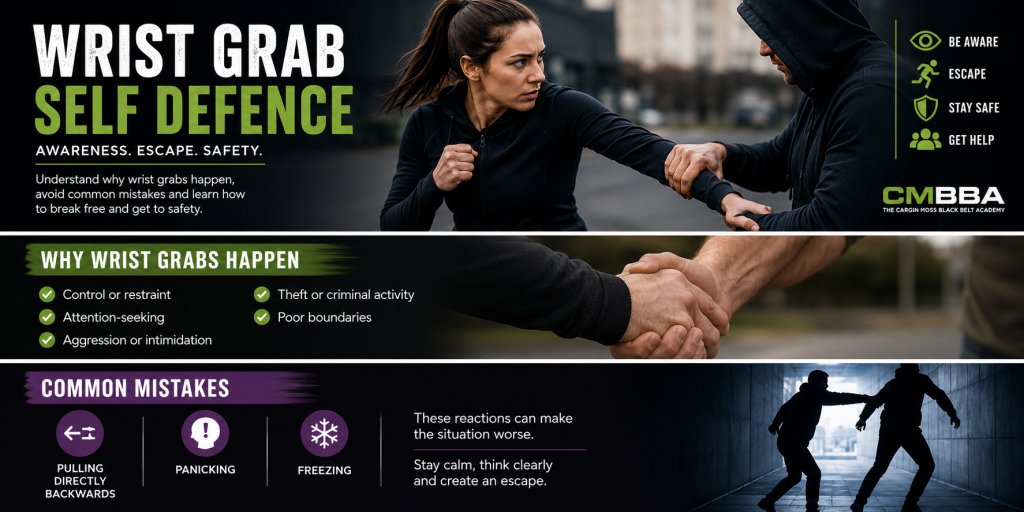
    Some common reasons for a wrist grab include:

    • Control or restraint: Someone may grab your wrist to stop you from leaving, walking away or taking an action.
    • Attention-seeking: A person may grab your wrist because they believe they are being ignored and want to force your attention.
    • Aggression or intimidation: A wrist grab can be used to assert control, threaten or frighten another person.
    • Theft or criminal activity: An offender may grab a person’s wrist while attempting to steal property or prevent them from escaping.
    • Poor boundaries or misjudgement: Occasionally, someone may grab another person’s wrist without understanding that the contact is inappropriate or unwanted.

    The important point is that you cannot always know what will happen next.

    This is why awareness matters.

    Awareness Is the First Line of Personal Safety

    Effective self defence does not begin with a punch, kick or escape technique.

    It begins with awareness.

    Being aware of your surroundings can help you recognise situations that may become uncomfortable or unsafe before physical contact occurs.

    Good personal safety awareness includes:

    • Paying attention to the people and situations around you.
    • Trusting your instincts when something does not feel right.
    • Maintaining personal space where possible.
    • Identifying exits, safe locations and people who could provide assistance.
    • Remaining aware of changes in someone’s behaviour or body language.
    • Staying as calm as possible so you can think clearly under pressure.

    You do not need to become paranoid or constantly look for danger.

    Instead, the aim is to become more aware, prepared and confident.

    That preparation can make a significant difference if something unexpected happens.
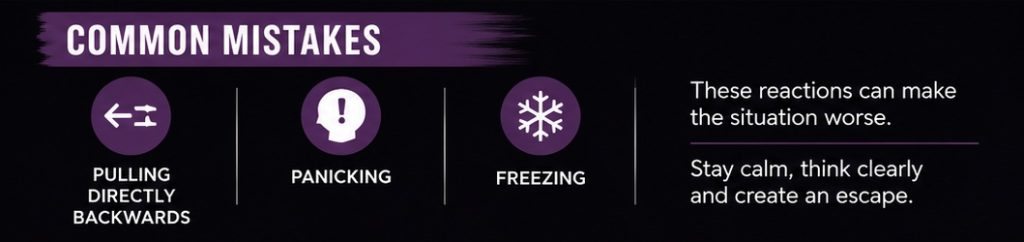
    common mistakes is trying to just pull away using strength alone,
repeatedly trying to do the pull away, or trying to release from an ever tightening grab
    Screenshot

    Common Mistakes When Someone Grabs Your Wrist

    When a wrist grab happens unexpectedly, the body can react before the mind has had time to process what is happening.

    Understanding some common reactions can help you prepare for them.

    1. Pulling Directly Backwards

    What people often do

    One of the most natural reactions to a wrist grab is to immediately pull the arm backwards.

    People may try to:

    • Pull away using strength alone.
    • Yank the arm repeatedly.
    • Fight against the grip without thinking about positioning.
    • Continue pulling even when the grip does not release.

    Why this may not work

    A person’s hand is designed to grip. When you pull directly against the grip, you may be working against the strongest part of the hold.

    Trying to win a strength contest can also:

    • Waste energy.
    • Affect your balance.
    • Increase frustration.
    • Give the other person more opportunity to maintain control.

    The better mindset

    Instead of thinking:

    “I need to pull harder.”

    Think:

    “I need to create an opportunity to break contact and escape.”

    This change in mindset is important.

    A wrist grab escape is not necessarily about being stronger than the person holding you. It is about understanding the situation and creating an opportunity to regain control of your movement.

    2. Panicking

    What people often do

    A sudden wrist grab can trigger an emotional response.

    Someone may:

    • Panic.
    • Make rushed movements.
    • Lose awareness of their surroundings.
    • Struggle to think clearly.
    • Forget to look for help or an escape route.

    If a person has never considered the possibility of being grabbed, the experience may be even more surprising.

    Why panic can make things harder

    When we panic, our attention can become focused entirely on the immediate problem.

    That can make it harder to notice:

    • Where the exit is.
    • Who is nearby.
    • Whether help is available.
    • Where the other person’s attention is focused.
    • Whether there is an opportunity to move away.

    The better mindset

    Stay as calm as possible and focus on your objective.

    Your objective is not to defeat the person.

    Your objective is to break contact, create distance and get to safety.

    3. Freezing

    Freezing is another common response to sudden or threatening situations.

    What people may experience

    A person may:

    • Become temporarily unable to react.
    • Hesitate because they are shocked.
    • Feel confused about what to do.
    • Wait for the situation to resolve itself.

    Freezing is a natural stress response and does not mean that someone is weak or incapable.

    However, preparation can help you respond more effectively.

    The better mindset

    Breathing can help you regain focus.

    Remember that speaking or shouting normally happens during an outward breath. Purposeful breathing can therefore help you regain control while allowing you to communicate at the same time.

    A simple verbal command such as:

    “Let go!”

    may also establish a boundary and attract attention.

    The aim is to move from being overwhelmed by the situation to recognising your options.
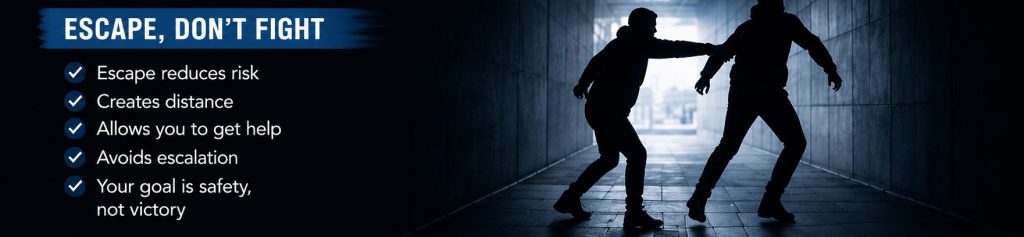
    escape and don't fight is an important first line of this defence concept
    Screenshot

    Wrist Grab Self Defence: Escape Rather Than Fight

    One of the most important principles of personal safety is understanding the difference between escaping and fighting.

    The primary goal of self defence should be to get to safety, not to win a fight.

    If someone grabs your wrist, you do not automatically need to fight them.

    Instead, consider the bigger objective:

    1. Recognise what is happening.
    2. Stay as calm as possible.
    3. Create an opportunity to break contact.
    4. Create distance.
    5. Move toward safety.
    6. Seek help if necessary.

    Why escape should be the priority

    Escaping can:

    • Reduce the opportunity for further physical contact.
    • Create distance from the threat.
    • Give you an opportunity to reach other people.
    • Reduce unnecessary escalation.
    • Allow you to seek assistance.

    Trying to physically dominate the other person introduces additional risks.

    They may be:

    • Stronger than you.
    • Larger than you.
    • More aggressive than expected.
    • Accompanied by another person.
    • Carrying something that could increase the danger.

    This is why CMBBA teaches a self-protection mindset rather than a fighting mindset.

    The objective is not:

    “How do I beat this person?”

    The objective is:

    “How do I get free and get away safely?”

    What If Physical Action Becomes Necessary?

    There may be situations where a passive wrist release is not enough.

    The circumstances surrounding the grab matter.

    A grab could be:

    • Relatively minor but unwanted.
    • An attempt to control your movement.
    • Part of an escalating confrontation.
    • A sudden attack by an opportunist.

    Your response should therefore be appropriate to the situation.

    A passive escape may be the most appropriate response in one situation, while a more physical response may become necessary in another.

    The principle remains the same:

    Create an opportunity to escape rather than becoming committed to a fight.

    Physical techniques should be trained responsibly, with safety and control as priorities.
    Screenshot

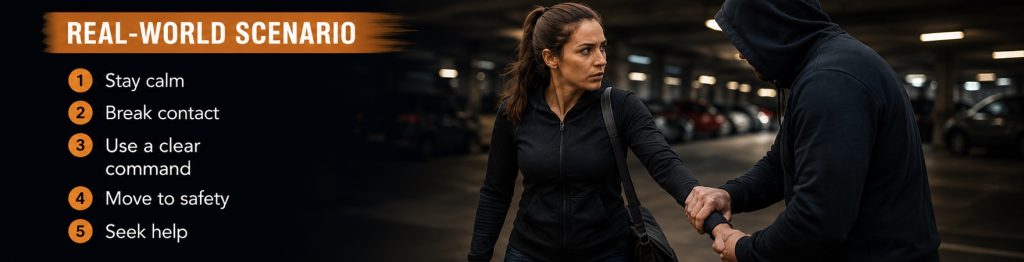
    A Real-World Wrist Grab Scenario

    Imagine you are walking through a car park when someone unexpectedly grabs your wrist.

    You do not immediately know why.

    They may be trying to get your attention, stop you from walking away or initiate a confrontation.

    Rather than immediately becoming involved in a physical struggle, a safety-focused response could involve:

    1. Stay as calm as possible.
    2. Recognise that you have been grabbed.
    3. Look for an opportunity to break contact.
    4. Use a clear verbal command such as “Let go!” if appropriate.
    5. Create distance once free.
    6. Move toward a safer, more public location.
    7. Seek assistance from other people, security staff or the appropriate emergency services if necessary.

    The objective is not to confront the person.

    The objective is to remove yourself from danger.
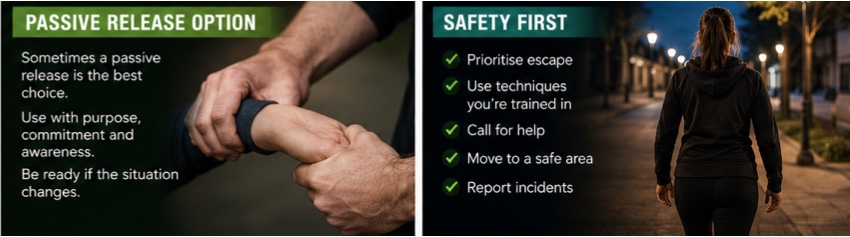
    passive release option is import as it can finish the situation straight away and think safety first
    Screenshot

    Why Timing and Commitment Matter

    One important lesson when learning how to escape a wrist grab is that simply knowing a technique is not enough.

    A technique needs to be practised.

    The CMBBA approach is based on learning a movement correctly, repeating it and developing enough familiarity that you can perform it with greater confidence.

    When someone grabs your wrist, repeatedly making half-hearted movements may not create the opportunity you need.

    A decisive, committed response—appropriate to the situation—can be more effective than repeatedly struggling against the grip.

    However, commitment does not mean aggression.

    It means understanding your objective and acting decisively to create an opportunity to escape.

    Evasion Gives You Back Control

    When someone grabs your wrist, they have temporarily restricted your movement.

    Your goal is to regain control.

    That does not necessarily mean controlling the other person.

    It means controlling your own ability to move away.

    Once you have created an opportunity to break contact, evasion and distance become important.

    Getting away can allow you to:

    • Reach other people.
    • Move toward a safer location.
    • Call for assistance.
    • Assess what is happening.
    • Avoid further physical contact.

    This is one of the most important principles of personal safety and self defence:

    You do not have to win the confrontation to successfully protect yourself.

    You need to create an opportunity to get away.

    Safety First

    Whenever you are dealing with unwanted physical contact, safety should remain the priority.

    Remember to:

    • Prioritise escape rather than confrontation.
    • Use a simple passive wrist release when appropriate and when you have been trained to do so.
    • Be prepared to respond appropriately if the situation escalates.
    • Use your voice to establish boundaries and attract attention when appropriate.
    • Move toward populated, well-lit areas where possible.
    • Seek help from other people, security staff or the appropriate emergency services if you feel threatened.
    • Report incidents involving assault, harassment or criminal behaviour where appropriate.

    There is no single response that is right for every situation.

    The circumstances, environment and behaviour of the other person all matter.

    Bonus: Passive Wrist Grab Release

    The three-kick principles taught within this mini-course are designed to give you practical options for creating an opportunity to escape.

    However, they are not the solution to every situation.

    There are circumstances where using kicks or strikes may be inappropriate.

    For example:

    • You may be at work or school.
    • The person may be someone you know and you do not want to injure them.
    • The situation may be relatively minor and a less aggressive response may be sufficient.
    • The environment may make a physical response inappropriate.

    In these situations, a passive wrist release may provide another option.

    However, passive does not mean careless.

    If you need to release a wrist grab, the movement should still be performed with purpose, commitment and urgency.

    And importantly, you should remain aware of what happens next.

    If the other person’s behaviour changes and the situation becomes more threatening, your priority may need to change from passive release to creating a greater opportunity to escape.

    Why Understanding Wrist Grabs Matters

    A wrist grab can seem simple, but the situation surrounding it can be complicated.

    The important lesson is not simply learning how to pull your wrist free.

    It is learning how to recognise the situation, manage your response and create an opportunity to escape.

    The most useful mindset is:

    Awareness Action Escape Safety

    You do not need to become a fighter to become more confident in your personal safety.

    You need to understand your options.
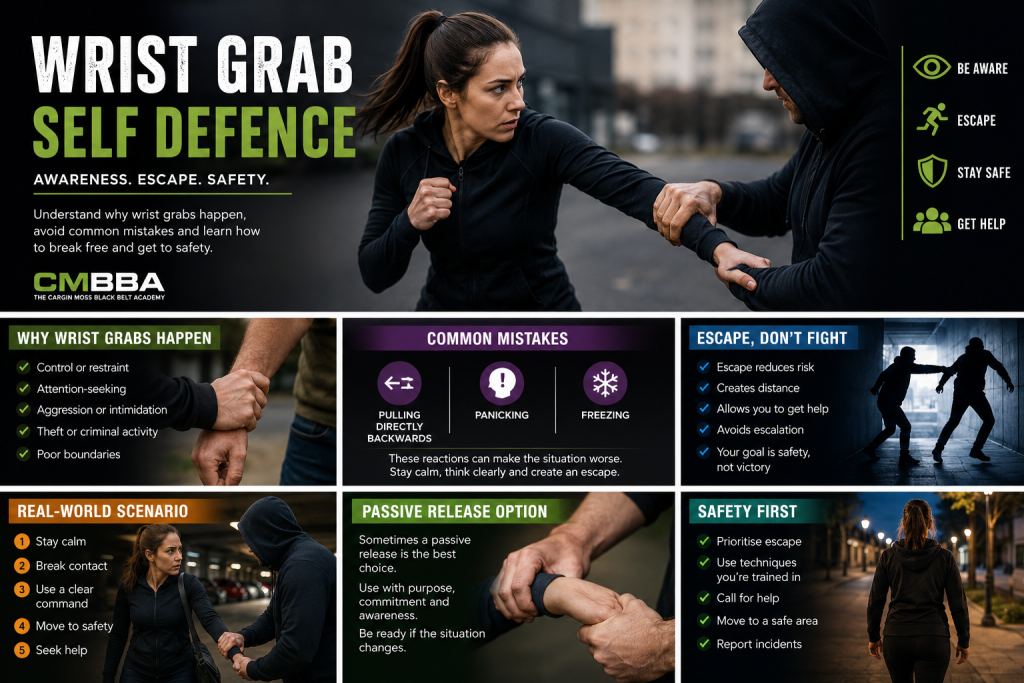
    wrist grab release in the safest way The goal of self defence is not to win a fight. The goal is to create an opportunity to get free, create distance and get to safety

    Key Takeaway

    Wrist grabs can happen for many different reasons, including attention-seeking, control, intimidation, criminal activity or poor judgement.

    Whatever the reason, your first priority should be your safety.

    Rather than automatically pulling harder, panicking or freezing, learn to recognise the situation, stay as calm as possible and look for an opportunity to break contact.

    The goal of self defence is not to win a fight. The goal is to create an opportunity to get free, create distance and get to safety.

    That is the mindset behind CMBBA training.

    Learn the technique. Practise the technique. Build confidence in your ability to respond.

    Because when something unexpected happens, preparation can make the difference between simply reacting and knowing what to do.
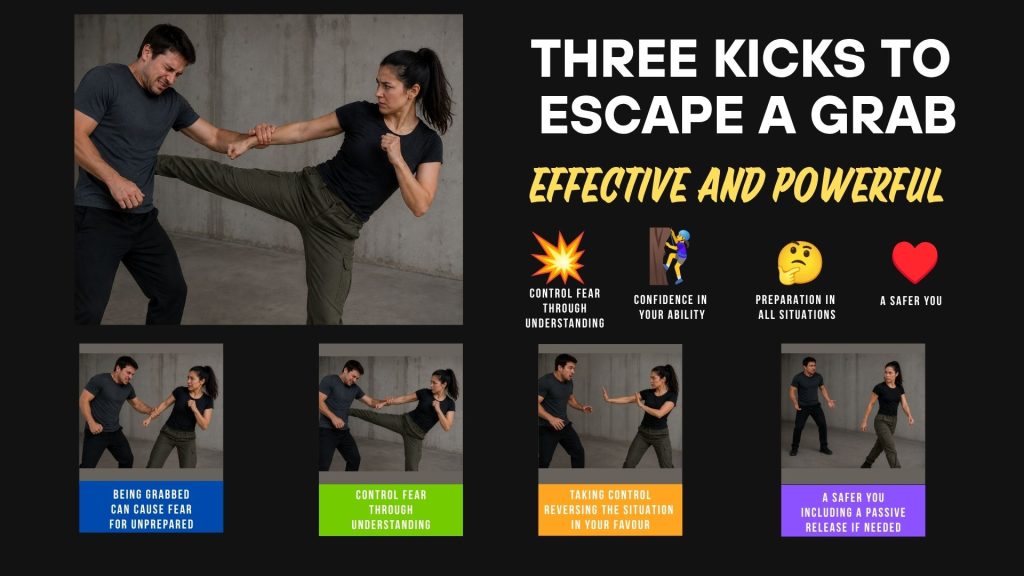
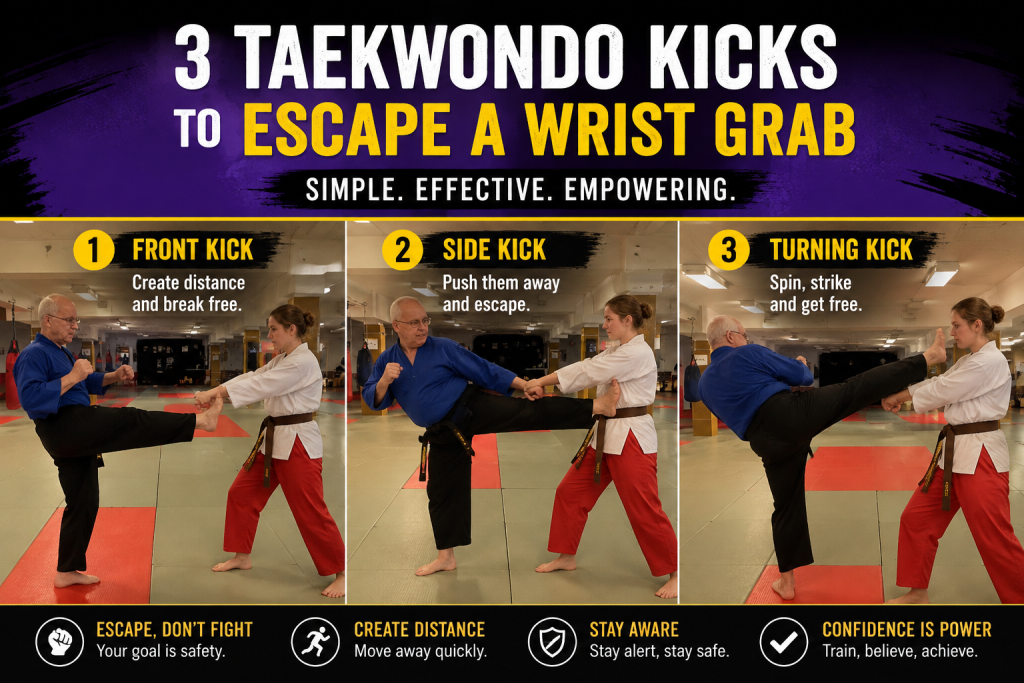
    Three kicks to escape a grab, front kick for quick release from a  grabber, side kick being another powerful kick and the turning turning kick. Three different kicks for every possibility.
additionally a quick passive release for first line of defence
    Three Taekwondo kicks to escape a wrist grab and the opportunity to get involved with the mini course to learn them in the safety of your own home, this is an excerpt from the CMBBA online home course

    Want to Learn How to Escape a Wrist Grab??

    The CMBBA Three Kicks to Escape a Wrist Grab mini-course takes you through practical techniques designed to help you understand what to do if someone grabs your wrist.

    You will learn the Front Kick, Side Kick and Turning Kick, along with a passive wrist release for situations where a less aggressive response may be appropriate.

    Don’t just watch a technique. Learn it, practise it and build confidence in your ability to respond.

    Click this link to get immediately access 👉
  • 5 Self-Defence Myths That Could Put You at Risk

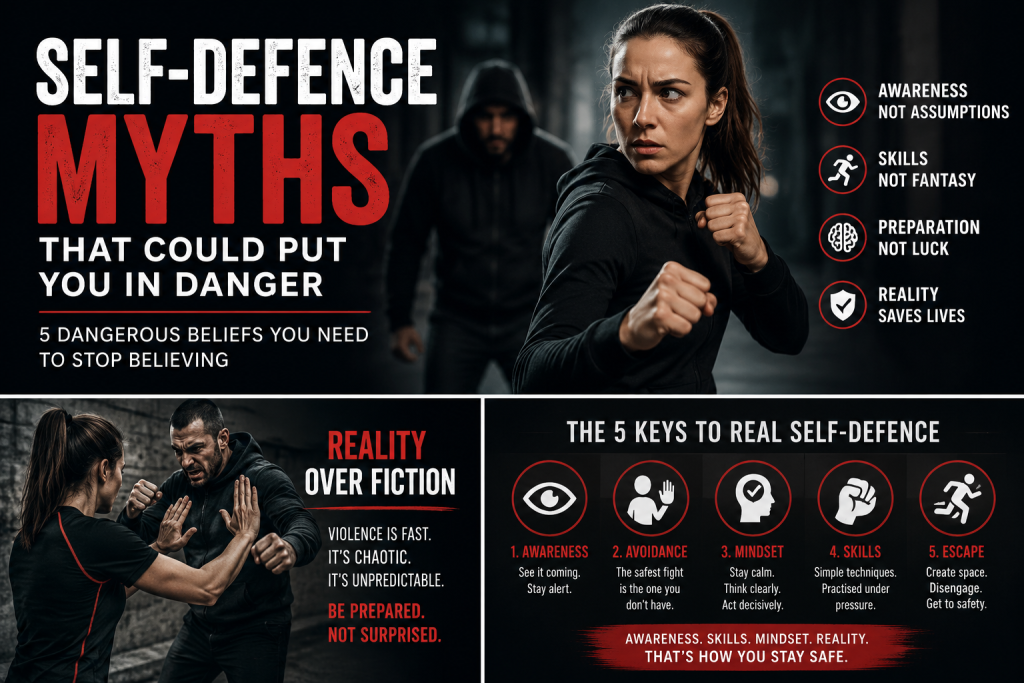
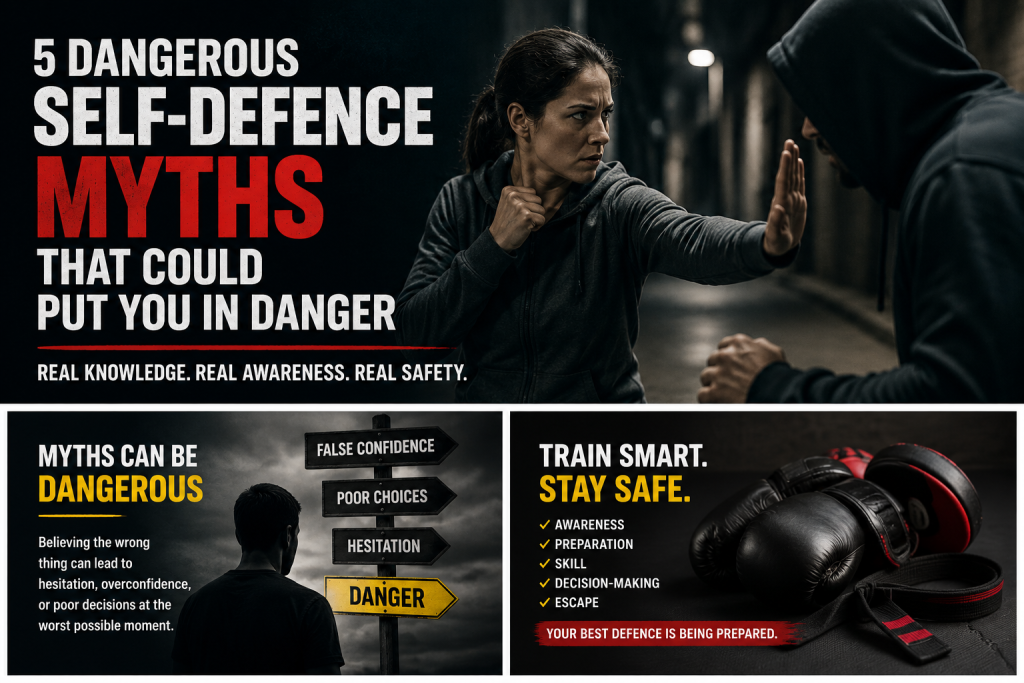
    Let's address the top dangerous self-defence myths that could put you in danger

    What Are the Biggest Self-Defence Myths?

    The truth is, when it comes to personal safety, misinformation can be just as dangerous as a lack of training. Many people base their understanding of self-defence on films, social media, or stories they’ve heard from others. These common self-defence myths can create false confidence, poor decision-making, and hesitation when it matters most.

    Most people think they understand what self-defence looks like. Popular culture tells us that bigger people always win, martial arts experts can handle any threat, and confidence alone is enough to survive violence.

    Real-world confrontations are rarely clean, controlled, or predictable.

    Violence is fast, emotional, chaotic, and deeply uncomfortable. In many situations, what keeps someone safe is not strength or flashy technique — it’s awareness, preparation, decision-making, and the ability to act under pressure.

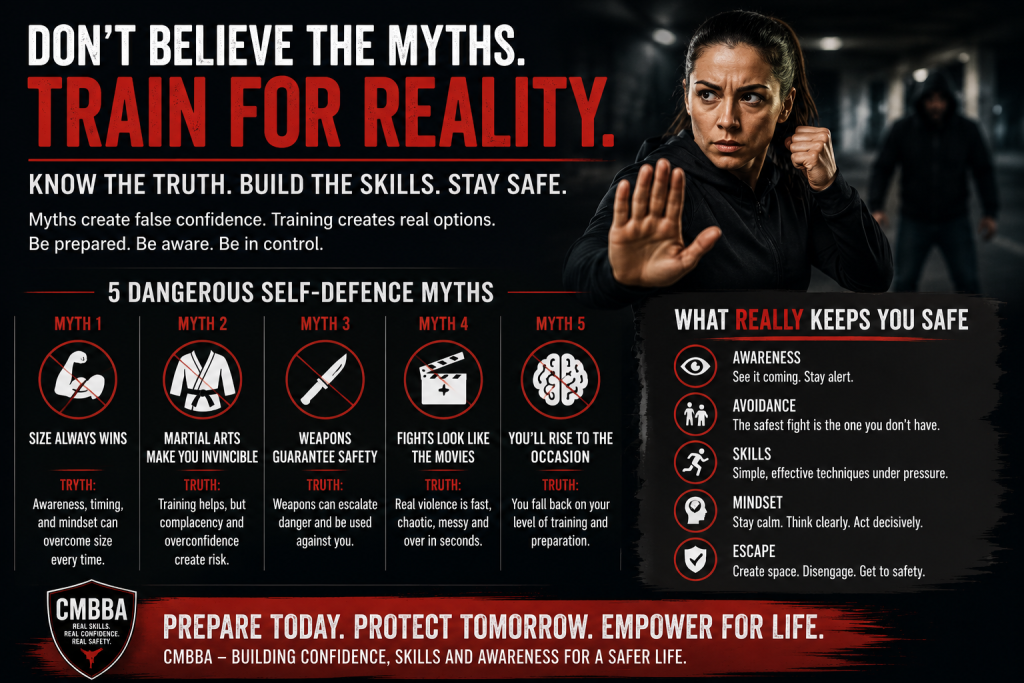
    Here are five dangerous self-defence myths — and the reality behind them.

    Myth #1: “Size Always Wins”

    Physical size and strength absolutely matter in a confrontation. Ignoring that reality would be irresponsible. A more aggressive or stronger person can deliver more force, recieve more impact, and often intimidate you before a fight even begins.

    Size alone does not determine the outcome of every encounter.

    Real self-defence is not a sporting contest where two people square off under equal conditions. Many assaults are opportunistic.

    An attacker will rely on surprise, intimidation, fear, or overwhelming aggression rather than skill alone.

    When you recognise danger early, you can creates distance, stays mobile, and react decisively, you may have a far better chance of escaping than someone who is physically larger who freezes or hesitates.

    This is why effective self-defence training focuses heavily on practical skills beyond physical power.


    Why Awareness Beats Strength

    Situational awareness

    Understand that awareness is one of the most important self-defence tools anyone can develop.

    Dangerous situations provide warning signs before violence actually occurs:

    • Someone invading personal space 
    • Aggressive body language 
    • Unusual attention or targeting 
    • Escalating verbal behaviour 
    • Environmental red flags 

    People who stay alert to their surroundings tend to avoid danger before it becomes physical.

    Being aware also means understanding your environment:

    • Identifying exits 
    • Avoiding isolated areas 
    • Not becoming distracted by phones or headphones 
    • Recognise when a situation feels “off” 

    The earlier you detect a risk, the more options you have to cope with them.

    Boundary setting

    A lot of confrontations escalate because people ignore the early discomfort or they feel pressured to remain polite.

    Strong verbal boundaries can prevent situations from progressing:

    • “Back up.” 
    • “I don’t want any trouble.” 
    • “Stop.” 
    • “Stay away from me.” 

    Showing clear communication, confident posture, and assertive behaviour you can discourage opportunistic aggression before physical action is necessary.


    Why Distance Matters

    Distance management is one of the greatest advantages in self-defence.

    The closer someone gets, the fewer reaction options you have. Managing distance gives you:

    • More time to respond 
    • Better visibility 
    • More escape opportunities 
    • Reduced vulnerability to sudden attacks 

    A physically smaller person who maintains distance effectively may avoid being grabbed or overwhelmed entirely.

    De-escalation

    Not every confrontation needs to become physical.

    De-escalation involves reducing the emotional intensity rather than feeding it. This can include:

    • Staying calm 
    • Avoiding insults or ego battles 
    • Using non-threatening body language 
    • Creating opportunities to disengage safely 

    The goal is not to “win” an argument. The goal is to leave safely.


    Why Simplicity Wins Under Pressure

    Simple, high-percentage techniques

    Under stress, complicated movements often fail.

    That’s why practical self-defence prioritises simple actions that are easier to perform under pressure:

    • Escaping grabs 
    • Protecting vulnerable areas 
    • Creating space 
    • Using body movement efficiently 
    • Escaping quickly 

    The objective is survival and escape — not domination.

    Stress response management

    Adrenaline dramatically affects the body:

    • Heart rate spikes 
    • Breathing changes 
    • Coordination drops 
    • Vision narrows 
    • Fine motor skills deteriorate 

    Training helps people function better despite the stress, instead of being overwhelmed by it.

    Myth #2: “Martial Arts Will Make You Invincible”

    Martial arts training can be incredibly valuable. It builds fitness, discipline, confidence, timing, coordination, and resilience.

    No training system can guarantee safety in every situation.

    Real violence is unpredictable. There are variables no training environment can fully replicate:

    • Multiple attackers 
    • Weapons 
    • Confined spaces 
    • Surprise attacks 
    • Extreme fear 
    • Environmental hazards 

    Even highly trained individuals can be caught off guard.

    Training builds capability — not invulnerability

    Good training improves:

    • Reaction speed 
    • Confidence under pressure 
    • Physical conditioning 
    • Decision-making 
    • Emotional control 

    Having the knowledge does not remove risk.

    In addition, believing you are unbeatable is risky because overconfidence can lead to unnecessary confrontation.

    Avoidance is still a skill that needs to be well rehearsed.

    One of the most important lessons in legitimate self-defence is that training is learning when not to engage.

    Walking away:

    • Protects your safety 
    • Reduces legal risk 
    • Prevents escalation 
    • Keeps emotions under control 

    The strongest people are often the least eager to fight.

    Real confidence includes humility

    Experienced practitioners usually become more cautious over time, not less.

    They understand:

    • Violence is unpredictable 
    • Anyone can be injured 
    • One mistake can change a life permanently 
    • Ego is dangerous 

    True confidence is calm, measured, and realistic.

    Myth #3: “Weapons Guarantee Safety”

    Many people assume carrying a weapon automatically gives them control in a dangerous situation.

    Without proper training and emotional control, a weapon can:

    • Escalate fear and aggression 
    • Increase panic 
    • Be taken away 
    • Create legal consequences 
    • Cause irreversible harm 

    A weapon does not replace judgment.

    Stress changes performance

    Under extreme stress:

    • Hands shake 
    • Fine motor control deteriorates 
    • Tunnel vision develops 
    • Decision-making slows 

    People often overestimate how effectively they will perform in a crisis.

    Escalation happens fast

    The introduction of a weapon can instantly raise the stakes of an encounter.

    What may have been a verbal confrontation can suddenly become life-threatening.

    Therefore, mindset matters more than tools.

    Self-defence begins long before physical force.

    People who stay aware, trust instincts, maintain boundaries, and leave risky situations early often avoid violence entirely.

    the 5 keys to real self-defence to help you stay safe

    Before we look at the next myth

    As a fact, every dangerous misconception has one thing in common—it encourages people to rely on assumptions rather than preparation.

    Myth #4: “Fights Look Like the Movies”

    Films and television create deeply unrealistic expectations about violence.

    Movie fights are designed to entertain:

    • Choreographed exchanges 
    • Perfect timing 
    • Long dramatic battles 
    • Clean techniques 
    • Predictable reactions 

    Real violence is usually sudden and chaotic.

    Real fights are messy

    In genuine confrontations:

    • People stumble 
    • Movements become sloppy 
    • Fear affects coordination 
    • Communication breaks down 
    • Situations escalate unpredictably 

    Most altercations are over very quickly.

    Adrenaline changes everything

    During the state of high stress:

    • Hearing may distort 
    • Time perception may change 
    • Memory becomes unreliable 
    • Breathing becomes shallow 

    People often struggle to perform even simple tasks effectively.

    Surprise is common

    Assaults do not begin with obvious warning.

    They may involve:

    • Distraction 
    • Deception 
    • Ambush 
    • Sudden aggression 
    • Emotional manipulation 

    That’s why realistic training includes pressure and unpredictability — not just memorising techniques in controlled settings.

    Myth #5: “You’ll Rise to the Occasion Automatically”

    People assume they will instinctively know what to do in a dangerous situation.

    The body’s survival response is complex.

    Fight.
    Flee.
    Freeze completely.

    All are natural human reactions.

    Freezing is normal

    When someone is confronted with sudden danger, the brain may struggle to process information quickly enough.

    People can become:

    • Mentally overwhelmed 
    • Physically rigid 
    • Hesitant 
    • Confused 

    This is not weakness — it is a biological survival response.

    Training creates familiarity

    Realistic training helps reduce panic by exposing people to controlled stress.

    Repetition develops:

    • Faster reactions 
    • Better decision-making 
    • Greater emotional control 
    • Increased confidence 

    The goal is not fearlessness. The goal is functionality under pressure.

    train for reality and break the myths that others do not understand

    Confidence is built beforehand

    People rarely perform at a level they have never practised.

    Therefore preparation matters because it creates:

    • Familiarity 
    • Automatic responses 
    • Emotional resilience 
    • Better judgment 

    In a crisis, people often default to their habits and training — not idealised expectations.

    The Reality of Self-Defence

    Real self-defence isn’t about winning fights. It’s about getting home safely.

    It is about improving your ability to:

    • Recognise danger early 
    • Make smart decisions 
    • Stay emotionally controlled 
    • Create opportunities to escape 
    • Protect yourself and others 
    • Survive unpredictable situations 

    The most effective self-defence mindset is grounded in realism, not fantasy.

    When people understand what violence actually looks like — and prepare accordingly — they make safer, smarter decisions when it matters most.

    Frequently Asked Questions About Self-Defence

    What is the biggest self-defence myth?

    The biggest myth is that physical strength alone determines who wins, awareness, decision-making, preparation and the ability to escape are often far more important than size or strength.


    Can martial arts guarantee your safety?

    No Martial arts develop confidence, fitness and practical skills, but no training can remove all risk.

    Good self-defence also involves awareness, avoidance and sound judgement.


    Is carrying a weapon the best form of self-defence?

    Not necessarily. Without appropriate training and a clear understanding of the law, weapons can increase risk and escalate situations. Awareness and avoidance remain your first line of defence.


    What is the most important self-defence skill?

    Situational awareness. Recognising danger early gives you more time, more options and a greater chance of avoiding violence altogether.

  • work on. —-Overcoming Self-Doubt: The Journey Beyond “I Can’t”

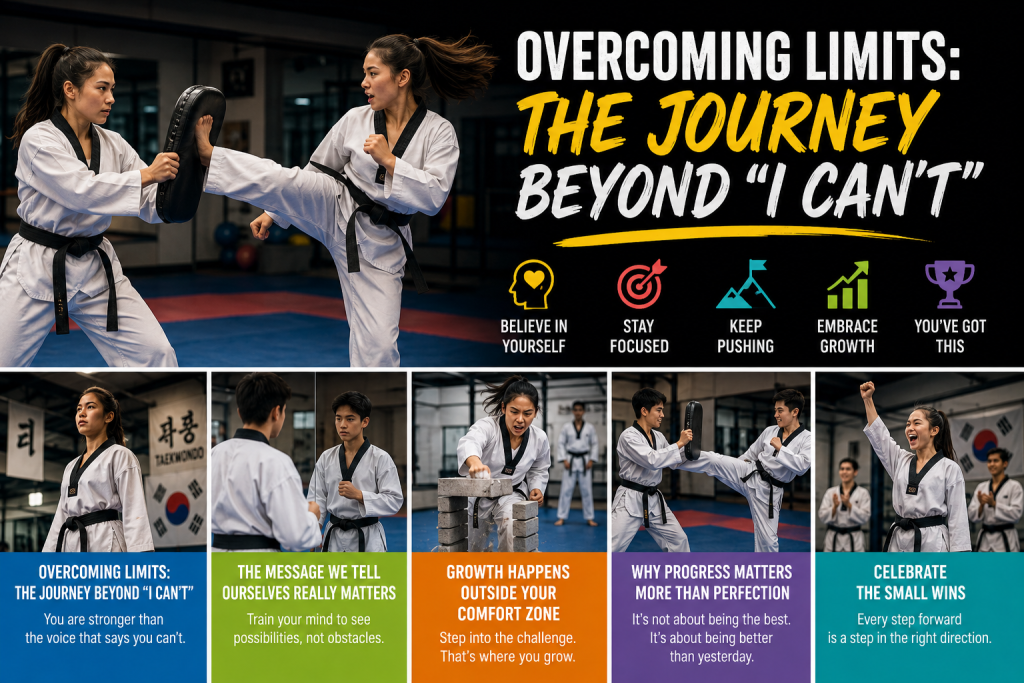
    Overcome the limits on a journey beyond the thought of I can't and the answer starts with, why not.

    “I can’t do this.”

    Most of us have said those words more times than we’d like to admit.

    Perhaps you’ve said them recently.

    They appear when life feels overwhelming, when a challenge seems impossible, or when failure feels almost certain. Whether you’re working towards a fitness goal, changing careers, starting a business, or simply trying to become a better version of yourself, self-doubt has a way of convincing you to stop before you’ve really begun.

    But here’s something worth remembering:

    The greatest limits we face are often the ones we place on ourselves.


    The Story You Tell Yourself Shapes Your Future

    Every journey begins with the conversations we have in our own minds.

    Some people tell themselves:

    • “I’m not smart enough.”
    • “I’m too old.”
    • “I’m too inexperienced.”
    • “People like me never succeed.”

    Over time, these thoughts become beliefs, and beliefs influence our actions.

    If you constantly tell yourself that you can’t succeed, your brain will look for evidence to prove you right. Fear, doubt and uncertainty quickly become excuses for standing still.

    But everything changes when you begin asking yourself a different question:

    “What if I can?”

    That single question shifts your attention away from obstacles and towards opportunities.

    And that’s where real growth begins.


    Growth Begins Outside Your Comfort Zone

    Comfort feels safe.

    Growth rarely does.

    Every worthwhile achievement starts with uncertainty.

    The first workout feels exhausting.

    The first presentation is nerve-racking.

    The first business idea seems risky.

    The first attempt is almost never perfect.

    That’s completely normal.

    The important thing is to keep going. With practice, difficult tasks become easier, your confidence grows, and success becomes more achievable.

    Many successful athletes, entrepreneurs and performers still experience nerves before important moments. The difference is that they have learned how to manage those feelings rather than allow them to control their actions.

    Once they begin, their focus replaces their fear.

    Courage isn’t the absence of fear—it’s refusing to let fear make your decisions.


    Progress Beats Perfection Every Time

    One of the biggest barriers to personal growth is believing everything must be perfect before you begin.

    You wait for:

    • The perfect time.
    • The perfect plan.
    • The perfect opportunity.
    • The perfect amount of confidence.

    The reality is that perfection doesn’t exist.

    Progress creates results.

    Improving by just one percent each day may seem insignificant, but those small improvements compound over time into remarkable achievements.

    Success isn’t built through giant leaps.

    It’s built through hundreds of small, consistent actions repeated day after day.


    Failure Is Part of Success

    Too many people see failure as a reason to quit.

    In reality, failure is one of life’s greatest teachers—if you’re willing to learn from it.

    Every setback builds resilience.

    Every mistake provides valuable feedback.

    Every obstacle develops strength, patience and wisdom.

    Think about the people who inspire you.

    Behind almost every success story are countless disappointments, setbacks and moments of self-doubt that nobody ever sees.

    Failure doesn’t define your future.

    Giving up does.


    Celebrate Every Small Win

    It’s easy to overlook how far you’ve come because you’re focused on how far you still have to go.

    Instead, celebrate your progress.

    Celebrate getting out of bed on a difficult day.

    Celebrate finishing a workout.

    Celebrate learning a new skill.

    Celebrate trying again after falling short.

    These aren’t small victories.

    They’re the building blocks of lasting confidence.

    Real self-confidence grows every time you keep a promise to yourself.


    Stop Comparing Your Journey

    Social media makes it easy to compare your beginning with someone else’s highlight reel.

    But everyone is on a different journey.

    Someone else’s success doesn’t reduce your own potential.

    The only comparison that truly matters is who you were yesterday.

    Personal growth isn’t about moving faster than everyone else.

    It’s about refusing to stop moving forward.


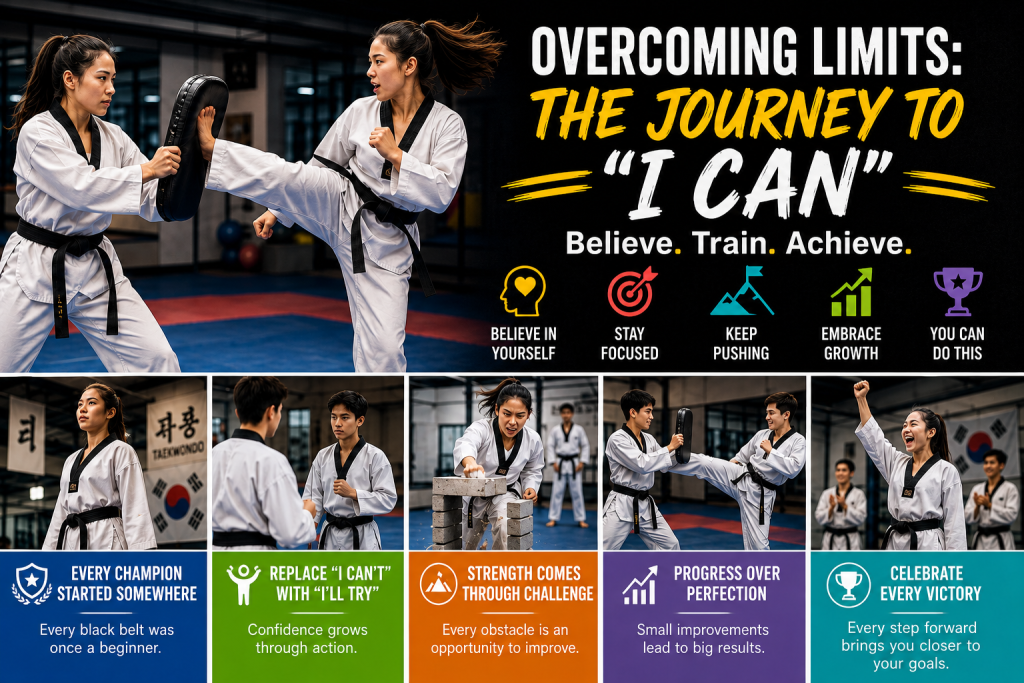
    start the journey from 'I can't' to 'I can' is a mindset and belief which is powerful when you get it correct. the journey start from within.

    Change Your Inner Dialogue

    The words you repeat to yourself become the beliefs you live by.

    Pay attention to how often you say:

    • “I can’t.”
    • “I’m not ready.”
    • “I’ll never be good enough.”

    Now replace them with:

    • “I’m learning.”
    • “I’m improving.”
    • “I can take the next step.”
    • “This is difficult, but I can grow through it.”

    Small changes in your thinking lead to powerful changes in your behaviour.

    And your behaviour determines your future.


    Your Journey Starts Today

    You don’t need extraordinary talent to achieve extraordinary things.

    You don’t need perfect timing.

    You don’t need every answer before you begin.

    You simply need the courage to take the first step.

    Every athlete was once a beginner.

    Every entrepreneur started with an idea.

    Every expert struggled with the basics.

    The difference wasn’t natural ability.

    It was persistence.


    Final Thoughts

    Learning how to overcome self-doubt isn’t about becoming fearless.

    It’s about choosing progress over perfection, one step at a time.

    There will be setbacks.

    There will be difficult days.

    There will be moments when quitting feels easier than carrying on.

    Keep moving forward anyway.

    Every challenge develops resilience.

    Every effort strengthens your confidence.

    Every small victory brings you closer to the person you’re capable of becoming.

    Don’t allow self-doubt to write your story.

    Write a new one—one where courage overcomes fear, persistence defeats obstacles, and progress matters more than perfection.

    Because your greatest achievement may be waiting just beyond the words:

    “I can’t.”

  • Northamptonshire Police Martial Arts Challenge

    Northamptonshire Police Martial Arts Challenge

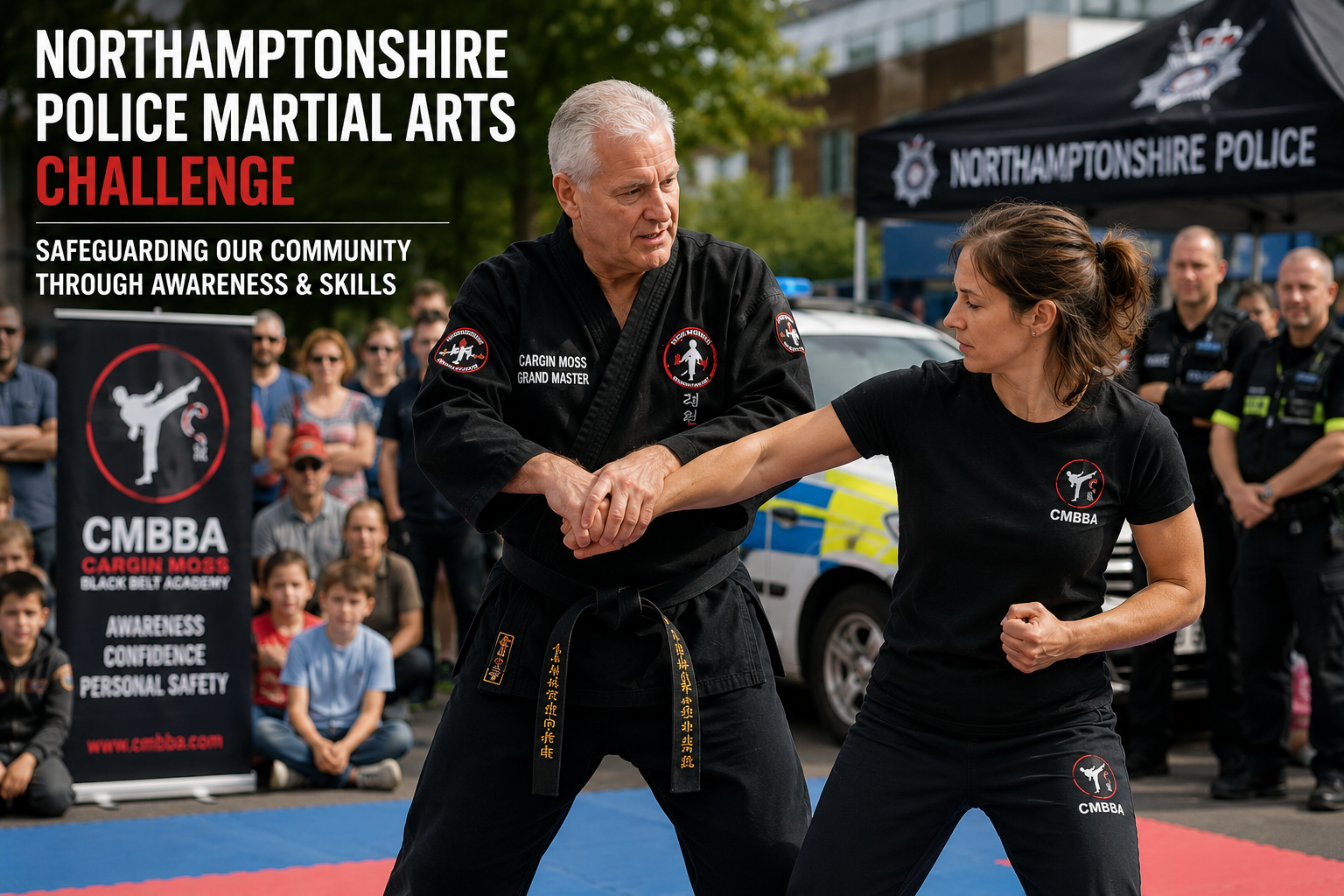
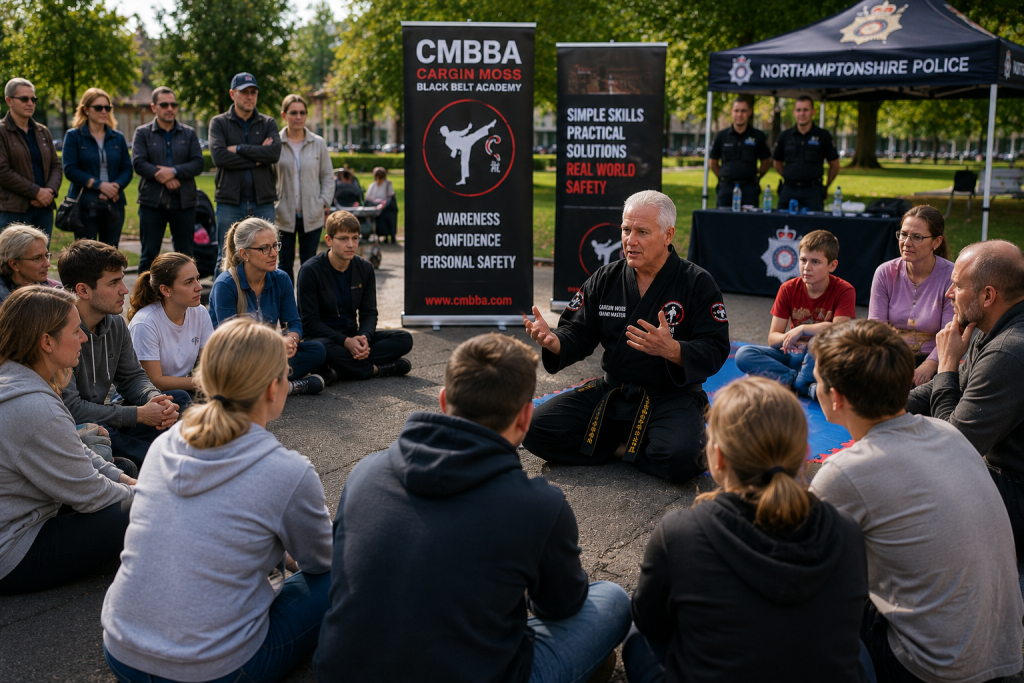
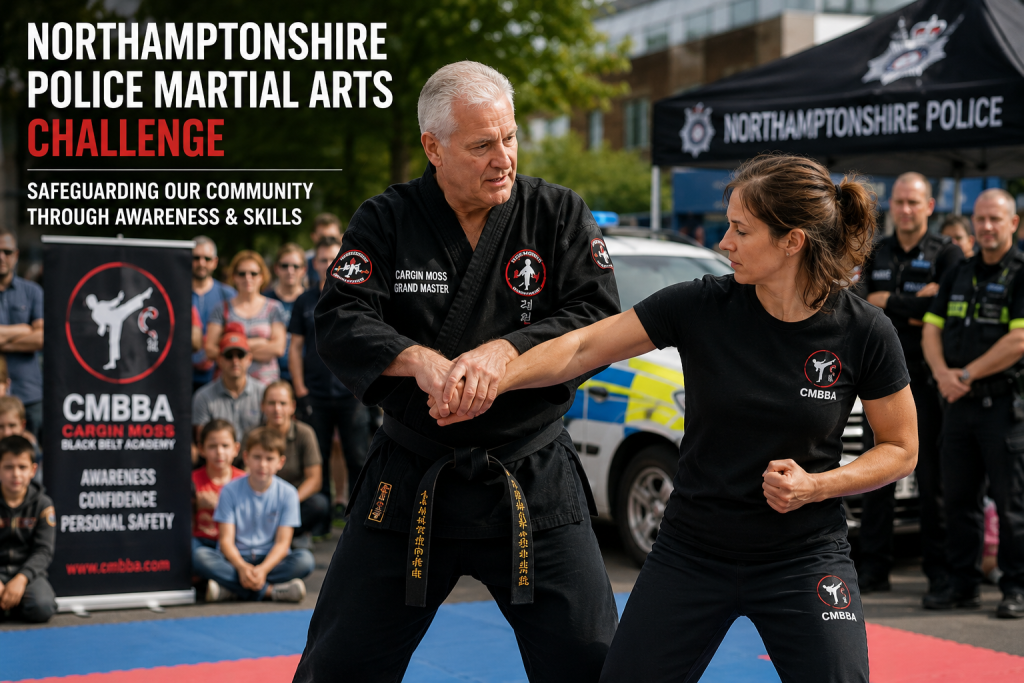
    Working together with Northamptonshire Police, CMBBA was proud to take part in a special Martial Arts Challenge, giving members of the public an opportunity to see how practical self-defence skills can help people stay safe.

    The event wasn’t about showing flashy martial arts demonstrations.

    It was about demonstrating simple principles that anyone can understand.

    Throughout the day we worked alongside police representatives to discuss personal safety, awareness and realistic responses to situations that many people may encounter in everyday life.

    Practical Skills for Everyday Situations

    One of the demonstrations that attracted the most interest focused on something surprisingly common:

    The wrist grab.

    Although it may seem like a relatively minor incident, a wrist grab is often someone’s first attempt to stop another person leaving or to exert control over them.

    During the demonstration we explained why people’s natural reaction is often to pull directly backwards—and why that isn’t always the most effective response.

    Instead, we discussed the importance of remaining calm, thinking clearly and creating an opportunity to move to safety.

    Self Defence Isn’t About Fighting

    One of the key messages throughout the event was that effective self-protection isn’t about trying to defeat another person.

    It’s about:

    • recognising potential danger early
    • staying calm under pressure
    • creating space
    • escaping safely
    • seeking help when appropriate

    These simple principles formed the basis of every demonstration we presented throughout the day.

    Working Together with Northamptonshire Police

    Events like this provide an excellent opportunity to encourage conversations about personal safety within the community.

    By working together with Northamptonshire Police, we were able to demonstrate that self-defence isn’t reserved for experienced martial artists.

    Many practical safety principles can be understood and applied by almost anyone.

    It was encouraging to see so many people asking questions, watching the demonstrations and taking an interest in learning more about protecting themselves and those around them.

    Learn the Complete Technique

    During the demonstration we introduced some of the concepts from our Self Defence Mini Courses.

    In our online training you’ll discover step-by-step instruction covering practical wrist-grab escapes, effective movement, creating distance and developing the confidence to react positively under pressure.

    Designed for beginners, the lessons can be completed from home at your own pace and are ideal for anyone wanting to improve their personal safety.

    Building Safer Communities

    At CMBBA we believe martial arts are about much more than kicking and punching.

    They build confidence.

    They improve awareness.

    They encourage respect.

    And, perhaps most importantly, they help people make better decisions when faced with difficult situations.

    We’re grateful to Northamptonshire Police for inviting us to be part of such a positive community event and look forward to supporting similar initiatives in the future.

    a bad description for now
    some police caption
  • Passive Self Defence Session at Northampton University

    Passive Self Defence Session at Northampton University

    One of the most rewarding parts of teaching martial arts is helping people realise that self-defence isn’t about fighting.

    It’s about recognising danger early.

    Making good decisions under pressure.

    And creating the opportunity to get home safely.

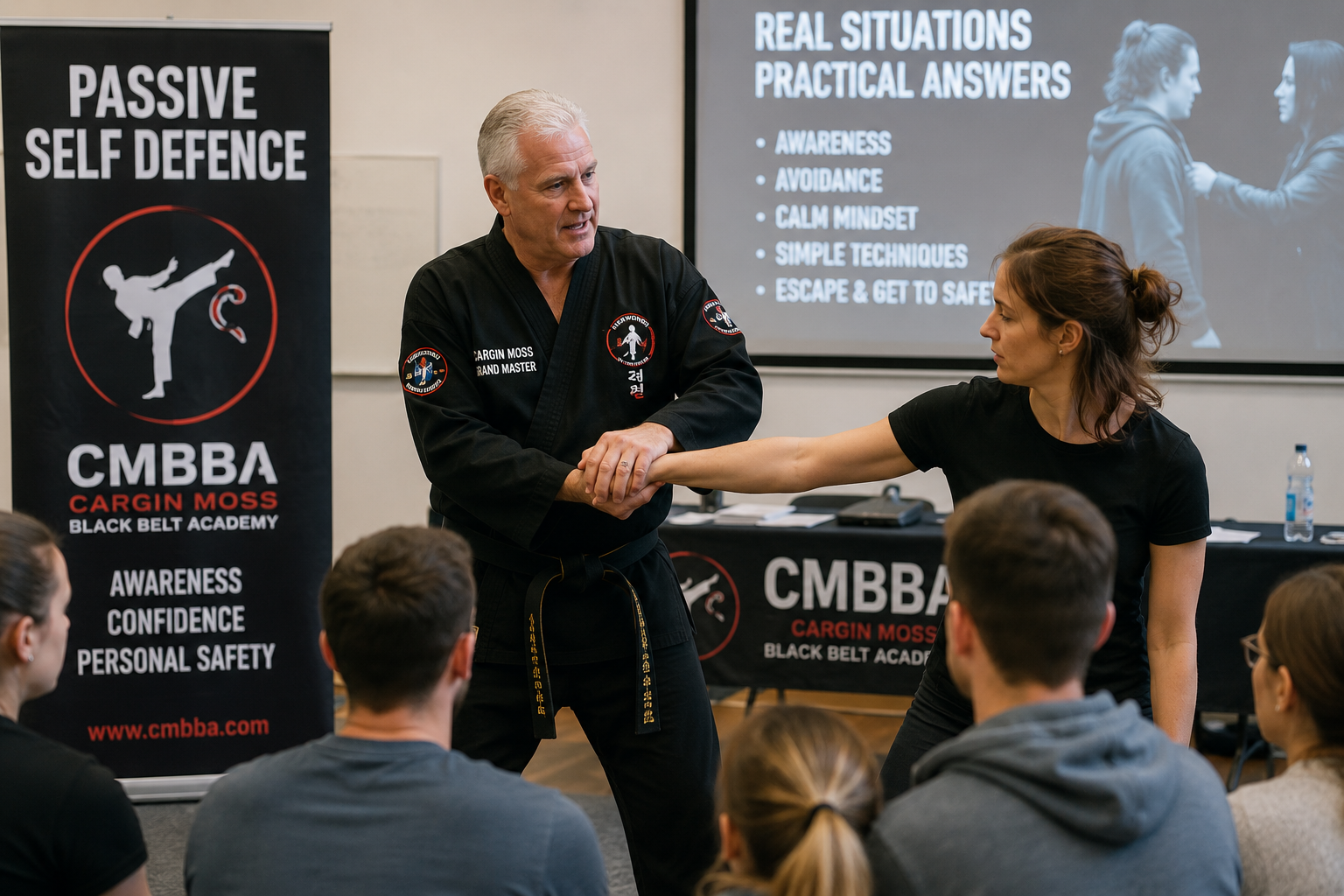
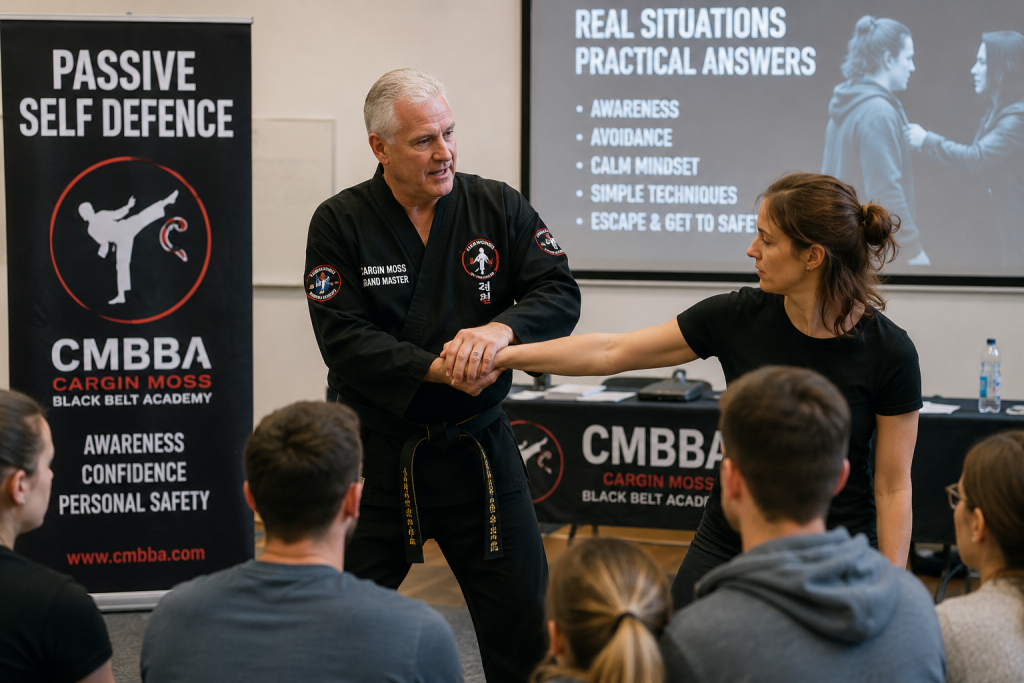
    That was the focus of our Passive Self Defence Session held at Northampton University on 17 October 2020.

    Throughout the session we explored a variety of everyday situations that can unexpectedly become uncomfortable or intimidating.

    Rather than concentrating on complicated martial arts techniques, we looked at practical responses that almost anyone can understand and apply.

    Awareness Comes First

    Many people think self-defence begins when someone grabs you.

    In reality, it begins much earlier.

    Being aware of your surroundings, trusting your instincts and recognising changes in behaviour can often prevent a situation from escalating in the first place.

    These simple habits require no physical strength and can make an enormous difference.

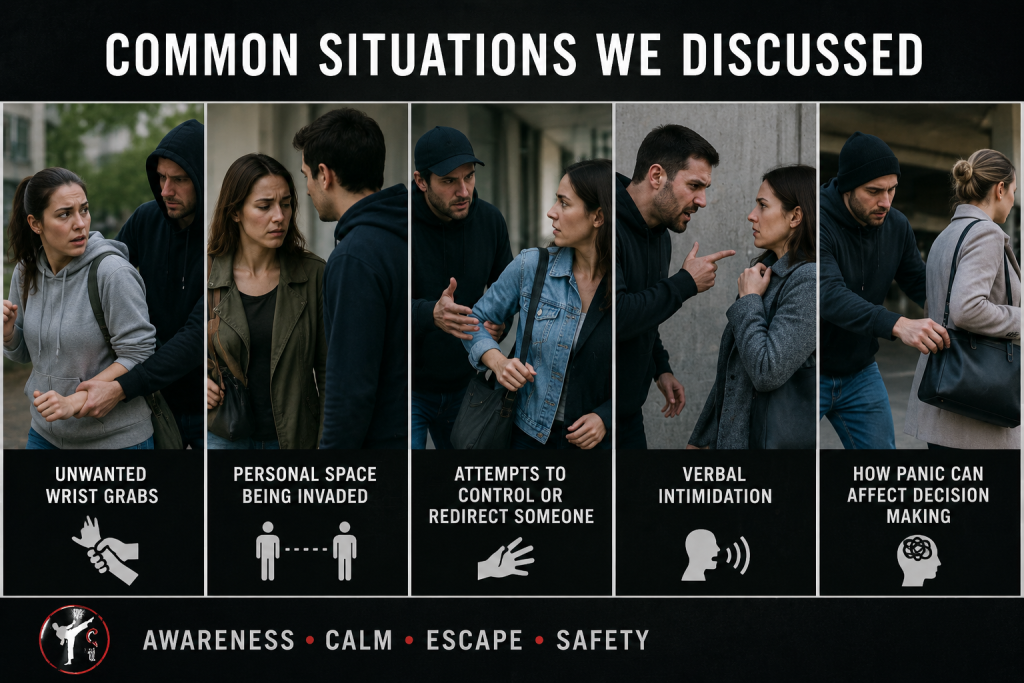
    Common Situations We Discussed

    During the workshop we demonstrated several common situations including:

    • Unwanted wrist grabs.
    • Personal space being invaded.
    • Attempts to control or redirect someone.
    • Verbal intimidation.
    • How panic can affect decision making.

    Students were encouraged to think about their reactions before relying on physical techniques.

    Often the safest option is simply creating an opportunity to leave.

    A Different Way of Thinking

    One of the biggest misconceptions surrounding self-defence is that you have to “win” a confrontation.

    We encourage a different mindset.

    Success isn’t defeating someone.

    Success is getting away safely.

    That change in perspective often helps people remain calmer and make better decisions under pressure.

    Want to Learn More?

    During the session we introduced some of the principles from our self-defence mini courses.

    These short online lessons explain simple techniques for creating space, breaking free from common wrist grabs and improving your personal safety through easy-to-follow demonstrations.

    Rather than trying to memorise dozens of complicated moves, you’ll learn practical skills that are quick to understand and designed for everyday situations.

    Whether you’re completely new to self-defence or simply want greater confidence, they’re an excellent place to begin.

    (Watch out for our £7 Mini Courses available from the CMBBA website.)

    More Than Martial Arts

    Events like this remind us that martial arts training isn’t just about belts and competitions.

    It’s about building confidence.

    Developing awareness.

    Helping people stay safe.

    And giving individuals the confidence to deal with situations they hope they’ll never have to face.

    We’d like to thank everyone at Northampton University for welcoming us, asking thoughtful questions and making the session such an enjoyable experience.

    We look forward to returning again soon.

    alt needs cargin
    cap needs cargin